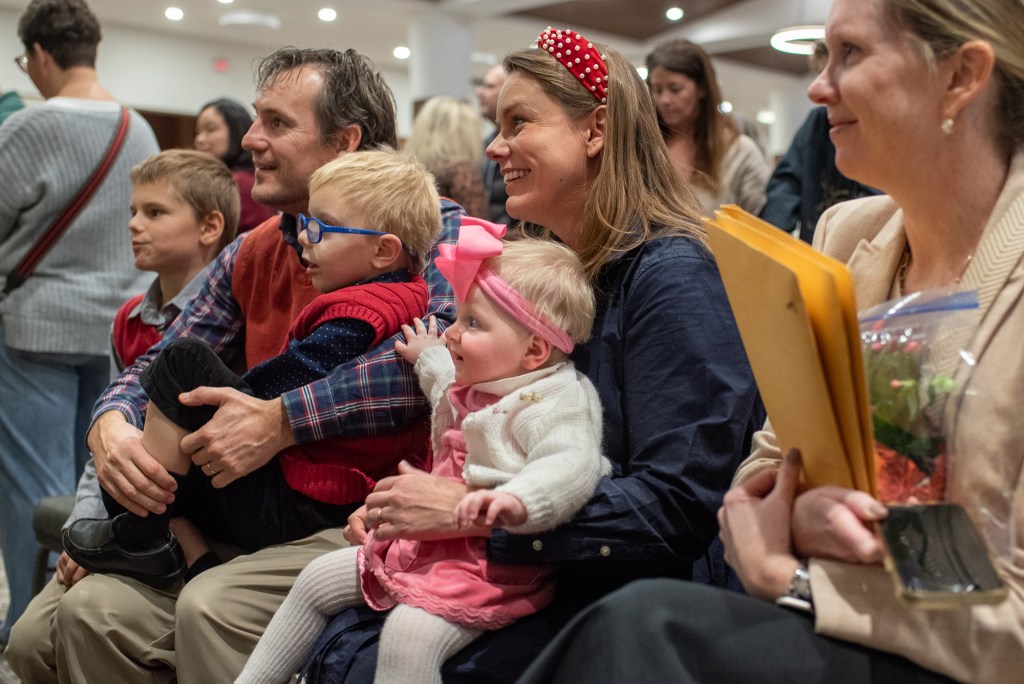
Elaine Denton is running to represent District 10 in the Onondaga County Legislature. She is currently a freshman legislator and the chair of the Planning and Economic Development Committee. Her opponent is Republican Edmond Theobald. Denton is running on the Democrat and Working Families Party line.
Central Current sent Denton 11 questions about housing, immigration, data centers, agriculture, and more. Here are her responses.
Central Current: With Micron moving in, politicians from every part of the political spectrum have emphasized the importance of building more housing. What is your vision for increasing housing in Onondaga County, and what role (if any) should the county play in doing so?
Elaine Denton: This year I sponsored a resolution creating the Housing and Transportation Citizen Advisory Board made up of elected officials, county employees, experts and community members which worked together on how the county can help address our housing crisis. After many public meetings with local elected officials and community members, the advisory board recommended actionable items we can start implementing now. This includes creating a $25 million builders fund to invest in missing middle housing like condos, multi-family homes and cottages and renovating existing homes. It also includes implementing Plan Onondaga by creating model zoning for municipalities to adopt allowing the housing we need to be built. I plan to follow through on implementing these and other recommendations.
CC: Transparency has been a major talking point in the legislature this year – from donor transparency around the aquarium to concerns that each caucus brings things to the floor without giving the other advance notice. Where would you like to see more transparency in county government, and what can the legislature do to enforce it?
ED: I would like to see more transparency in all aspects of county government from the facilities we are outsourcing management of to the planned expansion of Oak Orchard. To enforce transparency, members of the legislature need to continue to ask questions in public forums which I plan to do.
The legislature has a good practice of discussing most items in committees before moving them to session. When an item is brought to the floor, it should be discussed just as it would be in committee and depending on the information available it may pass, need more time or it may fail.
CC: As thousands of Onondaga County refugees and residents lose their access to SNAP benefits, what should the county’s role be in ensuring access to food?
ED: With the federal budget cuts, we are seeing the number of families being served by our food pantries increase across the county. The county has invested $500,000 for food pantry infrastructure grants and $350,000 for a local farm and food security pilot program. The legislature created a program coordinator position to oversee the county’s food investments and will be continuing to explore other ways to make sure that all county residents have access to food.
CC: Roughly one-third of Onondaga County’s land is used for agriculture. What, if anything, can the county do to support farmers, farmworkers, and other people involved in agriculture in the county?
ED: There are many different actions the county can take to support our local farmers. We can enact policies to protect farmland by preventing urban sprawl and focus on in-fill development. We can help connect local farms with schools and institutional buyers so farms have steady income streams. Perhaps the most important action we can take is to educate our community on where their food comes from through hands-on programs like community gardens, farmers markets and buying local products.
CC: As Micron prepares to move into Onondaga County, some county residents have raised concerns about PFAS and other emissions. How do you plan to mitigate the environmental concerns of county residents?
ED: I share residents’ concerns and am continuing to educate myself on the proposed industrial waste management system that is being built for Micron. We need to ensure that no waste ends up in our local environment with constant testing and oversight and having plans in place if a spill did occur. We also need to ensure that Micron pays their fair share and their water needs don’t increase costs to residents and ensure recycling and conservation programs are in place.
CC: Could the county be doing anything more to mitigate and combat its lead problem? If so, what?
ED: Onondaga County has allocated funding to remove the lead in our community, but it doesn’t feel like we are making a dent in this problem that we have known about for 50 years. If we are, this needs to be communicated and shown to the community. Just tracking what money has been allocated and where it is being spent is too complicated. We need more transparency on what has been allocated and where it is going and what remains to be mitigated. I will continue to ask these questions and partner with the state and local municipalities to keep moving forward on this crisis.
CC: Over the last two years, USCIS has rolled back protected status for many groups of immigrants and has begun to target people for detainment who might not have been targeted in the past (i.e.: asylum seekers). Do you believe the county needs to do anything more to protect its large immigrant and refugee populations? If so, what?
ED: I am proud that Sheriff Shelley is following the law and will not use our local resources to violate our rights. The county legislature voted to create a New American Affairs Council because the best way to learn how to help support people is to make sure they have a seat at the table and ask them.
CC: What – if any – role should AI have in county operations? Should the county develop rules and policies to regulate its use?
ED: I am concerned with the use of AI in general and in county operations. AI should be used as a tool but it cannot take away the human element. We need to protect county jobs and invest in our employees. The county absolutely needs to develop rules and policies to regulate its use.
CC: County Executive Ryan McMahon has announced a plan to study the feasibility and potential impacts of building a data center in Onondaga County. What would be the ideal outcome of that study? Depending on the outcome, how do you plan to respond?
ED: As the chair of the Planning and Economic Development committee, I am watching this process closely. It is important that our local municipalities have resources they need to evaluate these very large projects while listening to their community. The county data center study the county is working on needs to have what our current infrastructure can support and include input from residents.
My concerns with data centers are the environmental impacts these projects come with, water and energy use, noise and light pollution and the overall size of these structures. All these concerns and more need to be addressed.
CC: Syracuse consistently has one of the highest rates of childhood poverty in the nation. Do you believe the county should be doing anything more than it is currently to address childhood poverty? If so, what?
ED: Yes. The county absolutely has a responsibility to address childhood poverty. We need to ensure families have lead-free homes and access to child-care. The county needs a strong workforce development program available for residents to pick up the skills and education to benefit from the job opportunities being created by Micron and the supply chain companies investing in Onondaga County.
CC: What county issues and concerns have an outsize impact in your district specifically? How do you plan to address those concerns and bring them to the forefront of the legislative agenda?
ED: The concerns I hear from my constituents are rising costs of their property taxes, protecting our environment that we are so proud of here in CNY and the unnecessary complexity of government. I am addressing these concerns by considering the environmental impact of every decision I make on the county legislature and I continue to explore how we can provide effective services to residents efficiently. Change is here in Central New York and we need to make smart decisions to prepare for the next chapter in our story.
Read more of Central Current’s coverage

2026 General Election Q&A: Onondaga County Legislature 14th District candidate Jessica Dapson
Democrat Jessica Dapson is running to represent the legislature’s 14th District. She faces Cody Kelly in the race for the seat.

2026 General Election Q&A: Onondaga County Legislature 2nd District candidate Matt Jones
Democrat Matt Jones is running to represent the legislature’s 2nd District. He faces Kevin Meaker in the race for the seat.
2026 General Election Q&A: Onondaga County Legislature 15th District candidate Jo Bennett
Democrat Jo Bennett is running to represent the legislature’s 14th District. They face Woodruff Carroll in the race for the seat.
2026 General Election Q&A: Onondaga County Legislature 17th District candidate Laura Lavine
Republican Laura Lavine is running to represent the legislature’s 17th District. She faces Majority Leader Nodesia Hernandez in the race for the seat.
2026 General Election Q&A: Onondaga County Legislature 13th District candidate Blake Carter
Democrat Blake Carter is running to represent the legislature’s 6th District. He faces Ken Bush in the race for the seat.