For much of his life, Tehahenteh Franklin Miller lived within an easy drive of the shoreline of Lake Ontario.
Yet it wasn’t until he was in his 40s, Miller told me this week, that he learned what the name of the lake truly meant.
“It’s everything,” he said. “It’s all connected.”
In that sense, despite the furor about an attempt to replace the lake’s name that comes directly from the White House in Washington D.C., Miller understands intensely what endures, what fades away — and what is so essential it cannot be changed.
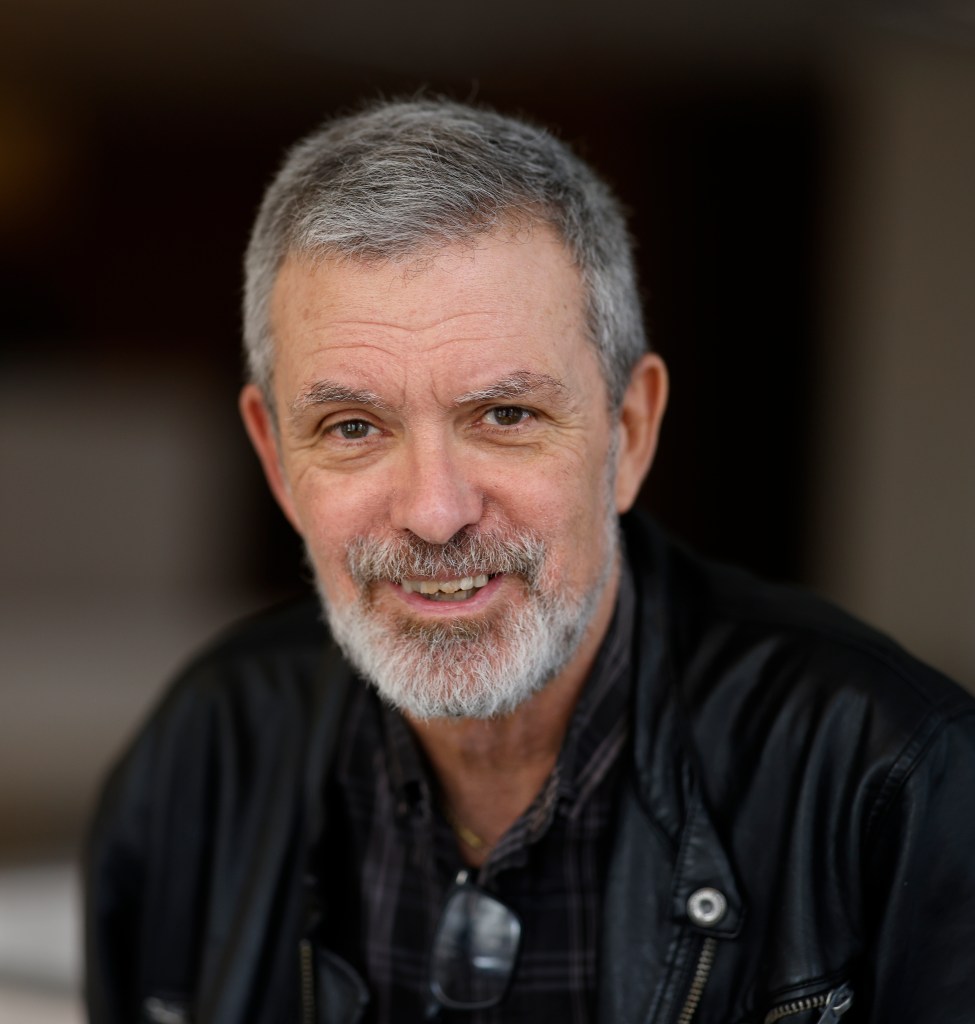
Miller, 80, was born at the Six Nations of the Grand River Indigenous territory, in Ontario — the Canadian province named after the lake. He is a Mohawk. His grandparents were fluent in the Mohawk language. Even so, by the time he was born, the language he learned was English, the one spoken all around him.
I called Miller after President Donald Trump — angry about Canadian resistance to U.S. trade demands — signed an executive order Thursday renaming Ontario as “Lake America.” At the heart of that gesture was the idea that Ontario — because of the province — is somehow a Canadian name or symbol, and that changing the name becomes a political taunt, statement and rebuke.
Miller, an Indigenous linguist who has made this work his life, knows a larger and ongoing truth.
As a young man, Miller left the Six Nations territory, his birthplace. He moved to Toronto to work as a commercial artist. It didn’t work out, spiritually or financially. He returned when he was in his 40s to the Six Nations territory, where one of his uncles challenged him:
“We really need teachers,” the uncle said, referring to the Mohawk language.
A startled Miller responded that he barely knew even bits and pieces. His uncle was unshaken.

“You’ve got it in the back of your mind,” he said.
The uncle clearly saw something in his nephew. Almost 40 years later, Miller is a revered Indigenous elder, educator and linguist. Through relentless diligence, he learned the Mohawk language. He located the last 18 born Mohawk speakers at Six Nations, then he listened. He became a student of the structure, sound and melody of what they said.
Over the years, they have all died. Miller, joined by other devoted teachers, has dedicated his life at Six Nations to passing on what they helped him comprehend about the language. The greatest method — and his passion — is immersion: Young people and children learn best from older Mohawks, who turn their knowledge into classroom instruction.
Asked why the language matters, Miller replied simply and emphatically: “Oh my God.” For much of his life, based on the words and concepts that were available, he perceived the landscape around him “from an English perspective.”
Thanks to excruciating patience and commitment, he learned Mohawk — the structure, the morphology, the syntax, the meaning. It was revelatory to the point of changing how he sees the world. The language, he said, taught him “how we do things, why we do things” within Haudenosaunee culture — and often why places and people are called what they are.
Certainly, he said, that is true of Lake Ontario.

To his grandparents, Miller said, the lake was “Kanyatariyo,” an ancient Mohawk word pronounced as “Gan-Ya-Da-Rio” — similar to a Wyandot, or Huron, word for the same waters — of sweeping and powerful meaning.
“The ‘ka’ is a female pronoun meaning it/she has much strength,” he explained. “‘Nyatar’ is the root of ‘lake’ (and) ‘iyo’ is the suffix adjective meaning good/beautiful.”
Thus the complex structure of the word “implies female energy” and a female entity, Miller said. That single word goes on to express the idea and reality of the lake itself, before it ends by conveying a sense of awe and beauty, wrapped into essential goodness.
All of that, even with a pronunciation changed by centuries of common use, still falls within one word:
Ontario.
To the Haudenosaunee, Miller said, the sense of the female — the nurturing and protective and maternal — is intertwined with the life-sustaining essence of the lake. Dr. Alyssa Mt. Pleasant, an Indigenous historian and scholar who was raised in Syracuse and now lives in Buffalo, describes Lake Ontario as “a precious relative,” central to a belief system that is explained by and within Haudenosaunee traditions and instructions since “time immemorial.”
“One of the places where these ideas are expressed are in the words that come before all else, a Haudenosaunee practice of thanksgiving that’s integral to beliefs, practices and ways of being,” Mt. Pleasant said.
Mentioned high in that address is water, equivalent to life and health, all tied to what the Haudenosaunee never forget is the shelter of the first nurturing human environment: The womb itself. “Our responsibility is to protect, maintain and steward the water,” Mt. Pleasant said, a duty magnified each day by a nearby Great Lakes system that represents more than 80 percent of the continent’s fresh surface water.
The Haudenosaunee awareness of that responsibility — expressed in constant gratitude for such awe, beauty and power — was at the heart of an Onondaga Nation “red paper,” prepared by the nation in 2019. The document argued successfully for Onondaga and Haudenosaunee inclusion within a new Lake Ontario National Marine Sanctuary, federally designated in 2024.
The paper, put together by nation counsel Joe Heath, argued that the Onondagas and all of the Haudenosaunee have unique cultural and natural bonds with the lake that go “far beyond federal and state concepts of ownership, possession and legal rights.”
The document laid out how Lake Ontario served as a key Haudenosaunee means of travel, food and community stretching deep into pre-colonial times, and simply concluded:
Any honest narrative about the meaning of Ontario must wrap in, at the core, the Indigenous perspective.
The original language, Miller said, makes it clear: That relationship will always intertwine with the lake’s name and identity, just as he finds himself in his Mohawk name, Tehahenteh, which has defined him since childhood as “the one who comes in front, in this direction.”
Rick Hill, a Tuscarora artist, writer and educator, often imagines his earliest ancestors standing before a body of glimmering, wind-swept fresh water that seemed as vast as a sea. They must have looked with wonder at a lake they tried to reflect with a word that was less a name than a description and a greeting:

Kanyatariyo.
Now, simply: Ontario.
No faraway pen stroke by an angry president can change how that stays true.
Hill grew up in Buffalo. His mother was raised at Tuscarora, a short distance from Lake Ontario. “It’s in the heart of our territory,” Hill said of the way the Haudenosaunee see the lake, with Indigenous people living for centuries on both sides of the water. To him, such history is simply a reminder that all this energy wasted on political power plays about a name could be served in a far better way.
We live in an era of growing worry, for good reason, about fresh water shortages. Rather than arguing cruelly and divisively aboout renaming the lake, Hill said, there should be international collaboration on one goal, of higher purpose:
“We ought to be thinking about repurifying it.”
For Miller, the question of the name becomes emblematic of a larger urgency about purpose and meaning in an increasingly isolated and complicated time. As more elders make their last great departure from Indigenous communities, Miller said, those who remain to serve as teachers of the original language at Six Nations — or any of the Haudenosaunee territories — can be in what he called “a very lonely” place.

The language holds truths — expressed as concepts — that go not only to the cultural soul of the Haudenosaunee but offer revelatory pathways to the greater communal good. “All our ways of being are tied into the language,” Miller said, and protecting it reflects indescribable importance.
With all her gales, with all her sunsets, so does Lake Ontario.
Read more of Central Current’s coverage

New study shows one in four schools in Onondaga County have high lead levels in drinking water
27.3% of the schools in Onondaga County have at least one water outlet in public schools used for drinking or cooking that tested above the state’s standard of 5 parts per billion of lead.


After ‘horseplay’-less budget cycle, Onondaga County Legislature approves 2027 budget and $25 million housing program
County Executive Ryan McMahon had told legislators he would fund their priority project if there was no “horseplay” in the budget cycle. Everybody played along.


Video: The Laurie Woolever interview
Bestselling author Laurie Woolever is interviewed about her experiences covering the restaurant industry and working with Anthony Bourdain.


2026 Election Q&A: New York State Assembly 129th District candidate Maurice ‘Mo’ Brown
Brown, a Democrat, faces Republican Shawn Fiato in the race for the seat. The Democrat challenger took down longtime incumbent Bill Magnarelli in the Democratic primary in June.


Sean Kirst: Jim Gifford’s life equaled faith in Elmwood. Saturday’s cleanup, in his memory, nurtures that spark.
An annual gathering in honor of a guy, lost to violence, whose everyday world represented full neighborhood commitment.