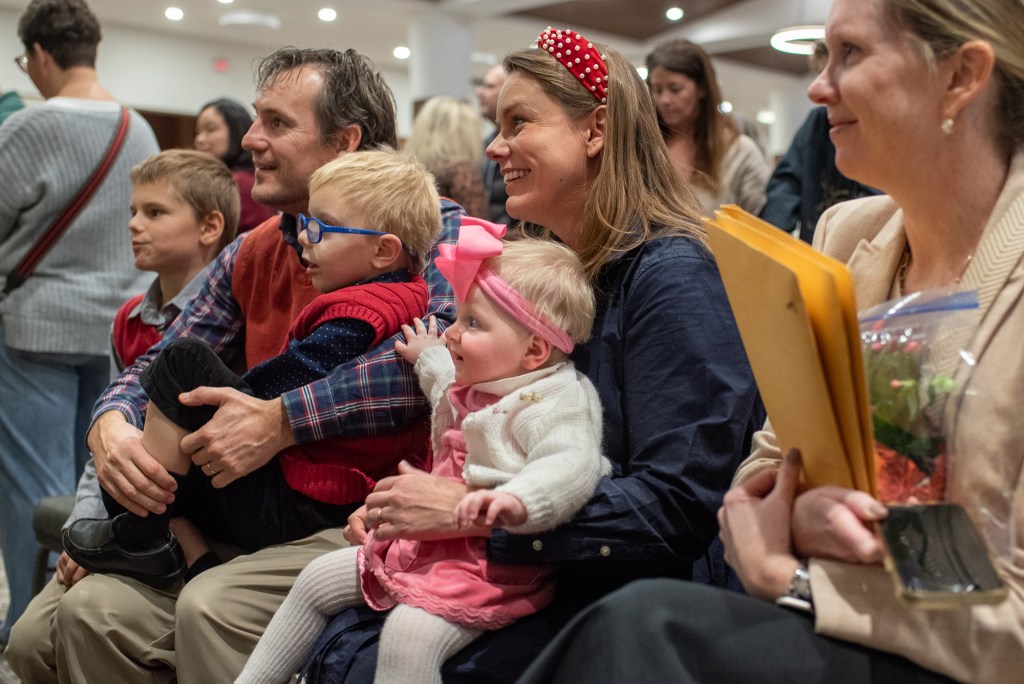
Daniel Ciciarelli is running to represent District 5 in the Onondaga County Legislature. His opponent, Democrat Ellen Block, is currently a freshman legislator. Ciciarelli is running on the Republican and Upstate Jobs lines.
Central Current sent Ciciarelli 11 questions about housing, immigration, data centers, agriculture, and more. Here are his responses.
Central Current: With Micron moving in, politicians from every part of the political spectrum have emphasized the importance of building more housing. What is your vision for increasing housing in Onondaga County, and what role (if any) should the county play in doing so?
Daniel Cicarelli: We should be focusing on the housing we already have that’s been neglected. This is something that first happens at a city, town and village level within their own code enforcement departments making sure properties are up to livable standards in the first place. Too much has been allowed to slide over the years with neglectful property owners and landlords which has led to the blight and dilapidation of housing, crippling the inventory of the market. The focus, and more cost-efficient solution, is to rehabilitate the structures we already have and then consider building more, not the other way around. If the county were to step in, it would be in a way to put pressure on the city, towns, and villages to hold their code enforcers accountable and reward those who take the initiative to reach housing objectives.
CC: Transparency has been a major talking point in the legislature this year – from donor transparency around the aquarium to concerns that each caucus brings things to the floor without giving the other advance notice. Where would you like to see more transparency in county government, and what can the legislature do to enforce it?
DC: There should always be full transparency. The fact that anyone must submit a FOIL request to obtain public information has always made no sense to me. When I’m your elected official and you ask me something, I’m going to get you that information. I won’t make you go through a long process that could take months to obtain it. What the legislature, and any municipal body, can do is put their personal and party agendas aside and focus on what the people ask of them.
CC: As thousands of Onondaga County refugees and residents lose their access to SNAP benefits, what should the county’s role be in ensuring access to food?
DC: Increasing funds for county programing and work with local farmers to best close the gap that it can.
CC: Roughly one-third of Onondaga County’s land is used for agriculture. What, if anything, can the county do to support farmers, farm workers, and other people involved in agriculture in the county?
DC: The county can work on building a better network that would enable farmers to more efficiently provide local vendors with their products. They can also offer various incentives which can be leveraged to not only help the farmers but also those in the county living in food deserts.
CC: As Micron prepares to move into Onondaga County, some county residents have raised concerns about PFAS and other emissions. How do you plan to mitigate the environmental concerns of county residents?
DC: These are already strictly regulated and watched by federal and state departments. The best thing the county can do is to continue to work closely with all parties involved and make sure that these chemicals are taken care of properly. The legislature should have frequent communications with the County’s Environmental Protection Committee to make sure they are taking the necessary steps in oversight and bring concerns to the legislature as quickly as possible.
CC: Could the county be doing anything more to mitigate and combat its lead problem? If so, what?
DC: More can always be done but once again, this first goes back to code enforcement issues of municipalities not holding property owners accountable to correct these issues in the first place.
CC: Over the last two years, USCIS has rolled back protected status for many groups of immigrants and has begun to target people for detainment who might not have been targeted in the past (i.e.: asylum seekers). Do you believe the county needs to do anything more to protect its large immigrant and refugee populations? If so, what?
DC: The county doesn’t have any authority on what laws are passed or changed by the federal government, however we should be using our resources to make sure that anyone in these groups have the proper access to the programming the county offers to make sure they are being treated fairly.
CC: What – if any – role should AI have in county operations? Should the county develop
rules and policies to regulate its use?
DC: AI holds a lot of great opportunities to expand programing and efficiencies within many of the county departments but most of that time that means reducing the work force as it tends to replace entry-level type positions. I think that the rules and policies developed to regulate AI should be precise but also fluid as AI is adapting quickly.
CC: County Executive Ryan McMahon has announced a plan to study the feasibility and potential impacts of building a data center in Onondaga County. What would be the ideal outcome of that study? Depending on the outcome, how do you plan to respond?
DC: The ideal outcome would be whatever is in the best interest of the people. That should always be the goal with anything that is done. I will respond in whatever way the people I represent tell me to respond. As their elected official, I work for them and am an extension of their voice. As of right now, I have heard the concerns surrounding these data centers and continue to do research on their pros/cons.
CC: Syracuse consistently has one of the highest rates of childhood poverty in the nation. Do you believe the county should be doing anything more than it is currently to address childhood poverty? If so, what?
DC: We should always be looking to do more but the question on the flip side is “at what cost”. Typically, this means shifting funds from another program or raising taxes. It’s never a simple answer to the question. We must look at the bigger picture of how we can do more without taking away resources from the people. My solution to this involves dissecting each county department to identify overspending that can be shifted without sacrificing the quality of resources we currently provide.
CC: What county issues and concerns have an outsize impact in your district specifically? How do you plan to address those concerns and bring them to the forefront of the legislative agenda?
DC: At the core, I believe that every district in the county struggles with being able to obtain an adequate quality of life. I will be the voice that convinces everyone to put their politics aside and just listen to what the people are truly asking for and get it done for them.
Read more of Central Current’s coverage

Onondaga County elections guide 2026
Central Current has prepared a paywall-free election guide to help inform you about the candidates and issues shaping each race.

2026 General Election Q&A: Onondaga County Legislature 14th District candidate Jessica Dapson
Democrat Jessica Dapson is running to represent the legislature’s 14th District. She faces Cody Kelly in the race for the seat.

2026 General Election Q&A: Onondaga County Legislature 2nd District candidate Matt Jones
Democrat Matt Jones is running to represent the legislature’s 2nd District. He faces Kevin Meaker in the race for the seat.
2026 General Election Q&A: Onondaga County Legislature 15th District candidate Jo Bennett
Democrat Jo Bennett is running to represent the legislature’s 14th District. They face Woodruff Carroll in the race for the seat.
2026 General Election Q&A: Onondaga County Legislature 17th District candidate Laura Lavine
Republican Laura Lavine is running to represent the legislature’s 17th District. She faces Majority Leader Nodesia Hernandez in the race for the seat.