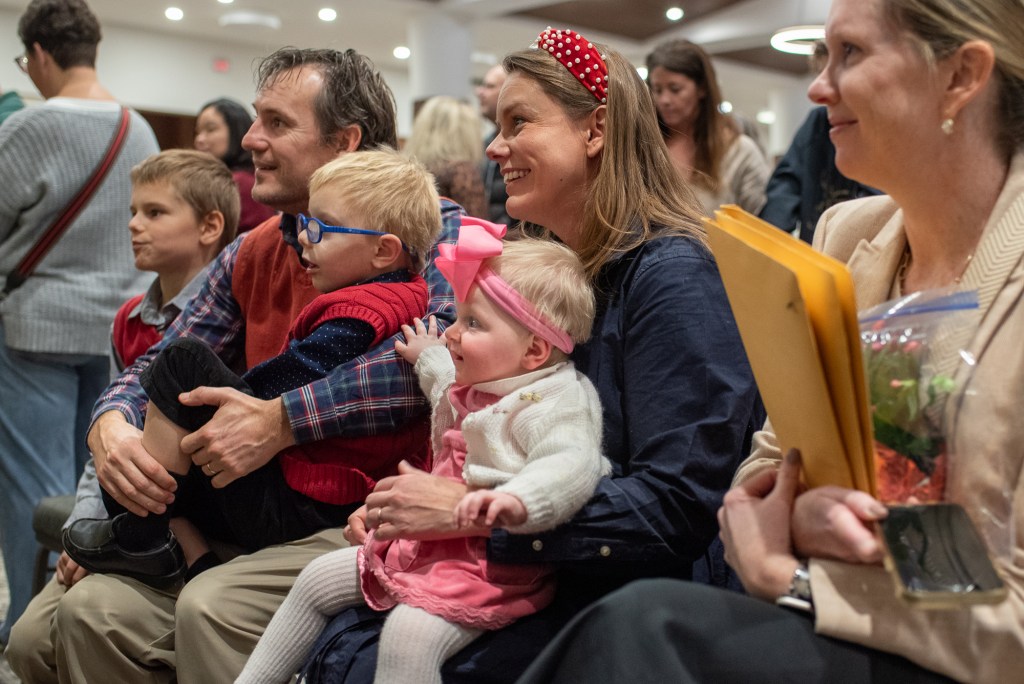
Raquan Pride-Green, running on the Working Families Party line, is vying for an at-large seat on Syracuse’s Common Council.
Pride-Green faces Rita Paniagua, who is running on the Democratic and Working Families Party lines, and Chol Majok, who is running on the Democratic Party line.
Pride-Green currently works as the the executive director of Blueprint 15. He has worked in several community-based roles, including as an after school program director and as a tutor for Syracuse University’s Early College High School program at Nottingham High School.
How do you think the city can up its housing capacity? How would you persuade the county and state to solve this problem?
I believe that improving our housing capacity is an ongoing process that requires our local government to partner with developers, community organizations, and residents. We will need to develop a realistic long-term housing plan that includes mixed-income housing that is both healthy and safe, continue to work with our partner organizations to make home ownership a more viable option, and explore non-traditional options as well. I recognize that the city has been trying to address this issue but it will take time.
Do you think Safer Streets and other anti-violence programs are adequate? How would you tackle juvenile crime and gun violence?
I believe our anti-violence programs are working very hard to address the complex issue of violence and youth violence in our city. I believe we as a community must work together to solve this issue. We have to invest in our anti-violent agencies as well as our youth. I believe we have to do a better job of community policing, engaging our youth, and supporting our youth. I will advocate for our anti-violent organizations, preventative services, mental health support, the return of investment in our after school programs, and other ideas that our community comes up with.
How important do you think the lack of reliable transportation is in the city? How would you fix that?
The lack of reliable public transportation is a major issue in our city as it would be in any city. The city is already working on how to resolve this issue. I still have a lot to learn about our public transportation so I would work to contribute to the existing effort of the city to help build capacity.
How will you ensure that the outcomes from the I-81 and Blueprint 15 projects are fair and equitable?
Can you clarify what the Blueprint 15 project is to you? As far as I-81, I will continue to work with Joe Driscoll, and the other members of the Community Grid Cooperative to continue to advocate for the best possible outcomes for the residents who have been and will be most affected by I-81. Blueprint 15’s role is to ensure that the decisions regarding the neighborhood are made with the residents in mind and or at the table. Blueprint 15 works with the residents and other stakeholders to make sure that residents are involved in the transformation process and that their voices are heard at all times.
What are the strengths of the city? How would you use them as at-large councilor?
Some of the strengths of the city of Syracuse are the diversity of our residents, the interconnectedness of our residents, and the resilience of our residents along with our centralized location amongst northeast cities. Our cost of living is considerably less than other cities. Syracuse is on the verge of improving economically. With our location we are an attraction for many new businesses. As a councilor at-large I will leverage my connections with residents to work on issues together so that we can have diverse approaches to solving the complex issues that our city faces with economic vitality as one of the top priorities.
Why do you think Syracuse’s lead problem persists? How would you help fight it?
Syracuse’s lead problem persists because a lot of the lead issues are in low income black and brown communities, where there is a lack of awareness of the issue and a lack of capacity to rapidly resolve the issue. I believe the city and county are working on this issue, but we need to invest more money into capacity building and mitigation. We are moving in the right direction with the efforts of community residents such as Oceanna Fair and others, but we must do more to improve in a hurry because too many lives are negatively affected.