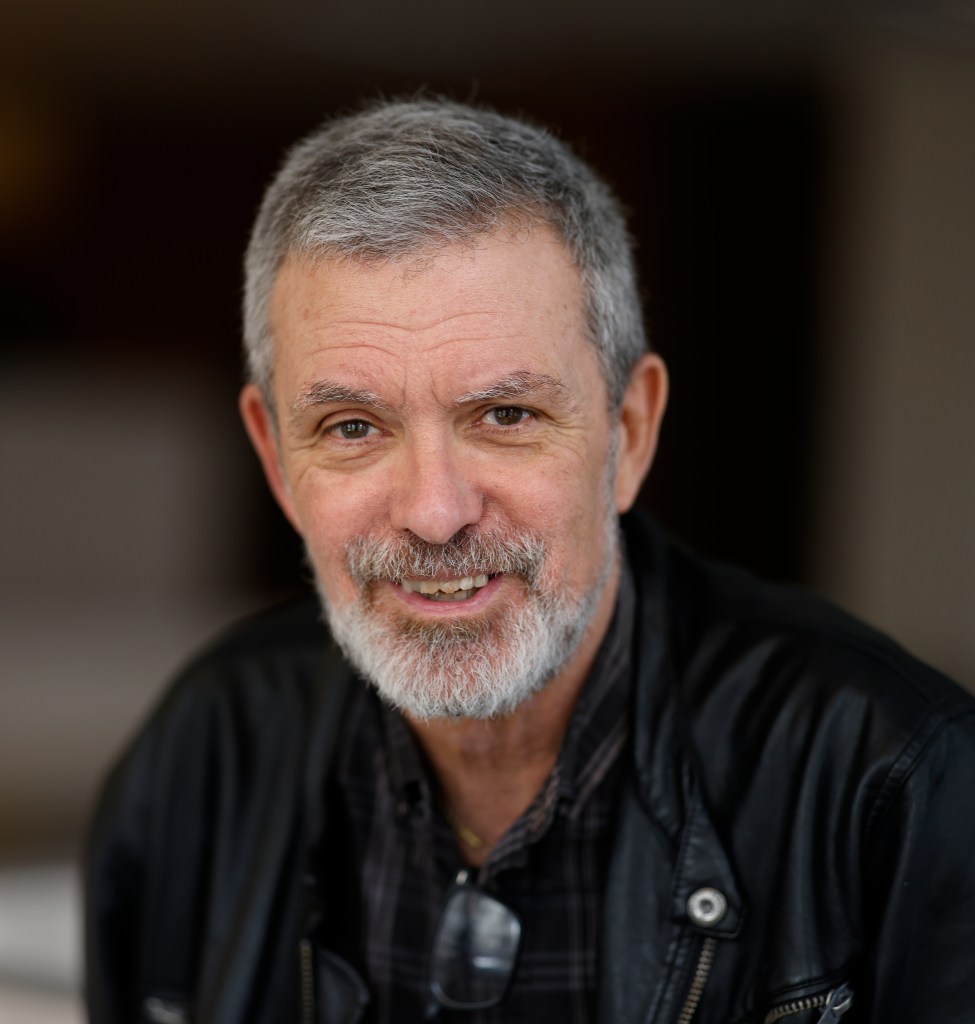
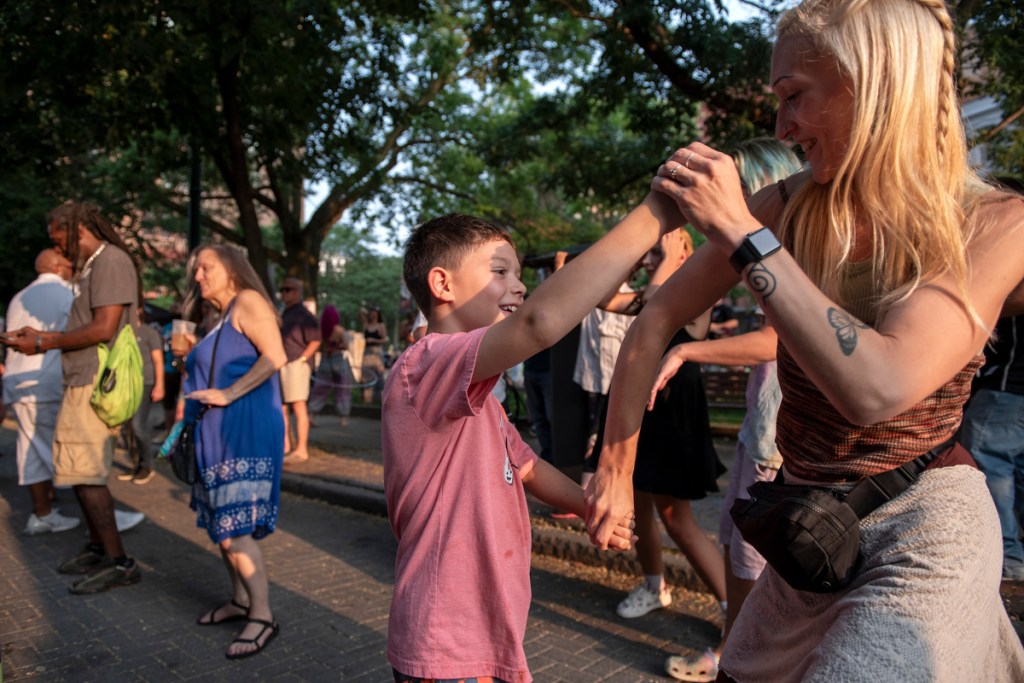
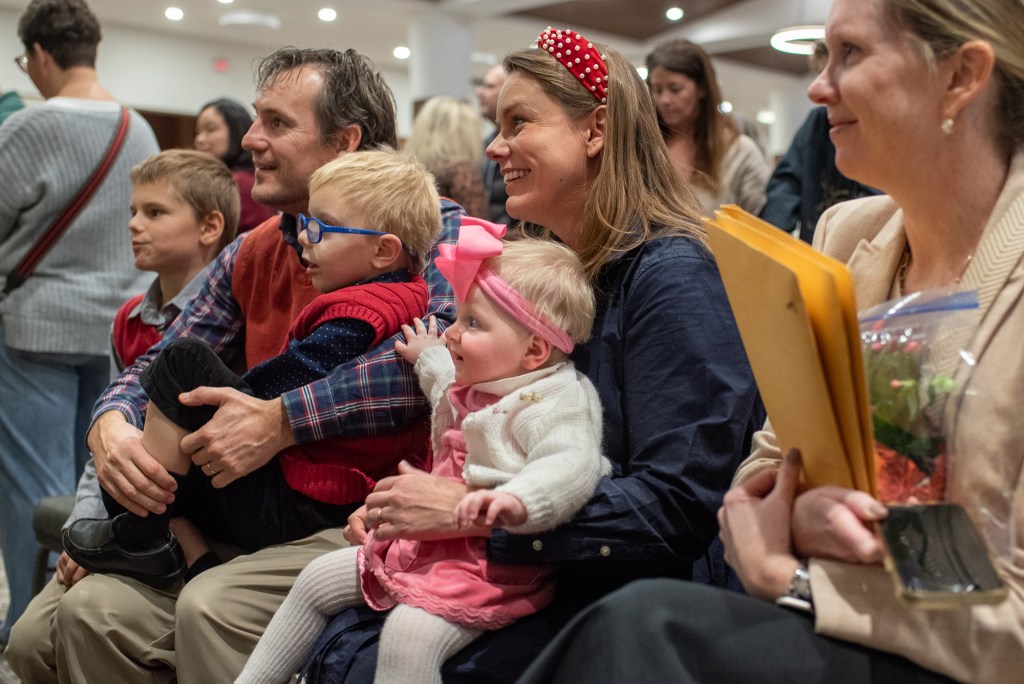
I stopped by the Corcoran High cross-country reunion Sunday afternoon at Kitty Hoynes tavern. At least 50 or 60 people who ran for John Hohm were gathered there. They tell me there might be 100 of his runners and supporters tonight at the Oncenter, where Hohm will be among this year’s slate of inductees into the Greater Syracuse Sports Hall of Fame.
Full disclosure: I know Hohm through my work and as a neighbor and a friend. He coached my kids at Corcoran, and occasionally taught them in gym or driver’s ed. My oldest boy became a certified lifeguard in his classes.
Based on that knowledge, I appreciate this chance to say: Hohm’s achievements as a coach and runner deeply merit his inclusion in the Hall of Fame, but it is a particular form of courage and loyalty that makes me hope the crowd tonight rises and applauds for a long time once his name is announced.
The reason, in the end, is intertwined with the same ethic he brought to coaching.
“He had such intensity of pride in the city schools,” said Guy Linton, an Onondaga Community College administrator who was part of several Hohm state championship teams at Corcoran. “He wanted us to be great at something the city schools aren’t usually given credit for.
“He lived that. He embodied that. He wanted us to remember we represented that culture, that feeling, when we went to Corcoran, and all of us who ran for him for over the years, we all knew we had one thing in common:
“We had coach.”

Put to the test in a way none of us would want to face, Hohm repaid that belief in a manner that far transcended sports.
As his runners will tell you — many now at retirement age themselves — his statistical achievements were extraordinary. After a great running career that included intercollegiate competition at Southern Illinois — the late Tom Coulter, a boxing and running legend, was a key figure in his decision to go there — Hohm coached for 46 years at Corcoran.
In cross-country alone, his teams won 10 sectional titles and five state crowns. It should have been six, but in 1981 his top runner, Steve Loretz — en route to finishing first in the state championship meet — got lost in the snow.
It was the fault of race officials, not Loretz. McQuaid Jesuit of Rochester formally won, but McQuaid and its coach — in a powerful gesture — sent the championship trophy to Corcoran.
Dozens of Hohm’s athletes are in town for the ceremony. Among them is Jim Scarborough, who ran on Hohm’s first state championship team in 1979 and eventually retired as a chief engineer in Indiana, supervising a design team of nine.
Of Hohm’s faith-in-the-city, Scarborough said: “We definitely ran with a little chip on our shoulders.” Hohm always trained alongside his student-athletes, said Scarborough, who helped coordinate the reunion. Hohm was so all-encompassing in his philosophy and methods that he created the same feeling Scarborough tried to instill in the engineers he supervised, much later in life.
Put absolutely everything you have into preparation, and when the time comes the pressure’s off: You’ll be ready for the moment. Scarborough was on Hohm’s first state championship team, and he remembers how Hohm gathered his runners in the Corcoran gym a few days before the state title meet. He told them simply:
“The work is done.”
They had trained so well, and with such heart, there was nothing left that was going to make them any better, which they proved when the time came.
“I’ve taken that with me my whole career,” Scarborough said.
As with all great programs, that approach — once embraced — turned into culture. John Weidman, who ran for Hohm in the 1980s, was only 4 when his parents divorced. He left with his mom for Florida. Weidman struggled there. He eventually returned to Syracuse to live with his dad.

Weidman described himself as filled with unfocused, corrosive anger, always a dangerous thing for any teen. He was a freshman, new to Corcoran, when Hohm approached him in gym class: Did he ever think about running cross country? Weidman was flippant and dismissive. He said he really wanted to be a wrestler. Hohm replied: Well, to do it, you’ll need to be in shape.
There is no way to overstate what cross-country meant, Weidman said: “It gave me and everybody else something to really believe in.” His fury drained away. He bought into the culture and the lore, the us-against-the-world approach of a bunch of teenagers — mainly from the Strathmore neighborhood — who meshed into an Upstate running dynasty.
Hohm told me he never had any interest in coaching anywhere else. “I was a city kid,” he said, going back to childhood and the days when he ran for Nottingham. Corcoran and the city neighborhoods around the school — as they remain for him today — became his home and his community.
Matt Kerwin, now a lawyer with National Grid, spent much of his childhood in Oswego County, and moved back to Syracuse two weeks before he began high school. “I was super-shy,” Kerwin said. Running gave him an identity, a focus. He recalled how Hohm never cursed. He never belittled his runners. Instead, the expectations were projected through an intensity wrapped around a fundamental lesson:
This is what you need to do to be successful.
“He taught us that work ethic and discipline pay off,” said Dan McSherry, an elite runner whose buddy Ryan Davis — a teammate on elite Corcoran teams in the early 1990s — spoke to the same theme:
“He took a lot of city kids, and look at what he did.”
What Hohm emphasized, said Paul Norman, “is how great we could be if we all stayed together and wanted the same thing.” Norman was on the Loretz should-have-been-the-state-champions team. He said Hohm established how success happens “not by chance but by preparation, training and desire to win.”
That matters throughout life, Norman said, as Hohm would prove on an almost unbearable level. In the summer of 1993, while his family was away, Hohm heard a noise in the middle of the night. He rose from bed and was attacked in the dark by some men who had broken into the house. He was stabbed in the stomach, bound and gagged, choked and left for dead.

The intruders stole his car and drove away. Hohm crawled to the phone and called the police so quickly those attackers were captured within a mile or two of the house. In a way beyond belief, he responded to the moment, though his full recovery — through a sequence of painful surgeries and procedures — would involve many years.
Today, I live a city block away from Hohm. It is hard to describe the wave of shock and fear that swept across our larger neighborhood at the time of the assault. Hohm and his family could have left. He could have reacted with rage and fear.
Instead, he had many intense discussions with investigators and he said exactly what the police told him: The attack was a freak thing. His attackers made a couple of chance turns and chose a house at random, mainly because they saw no lights were on. It had nothing to do with where he lived, or where he taught. He remained committed to the teenagers he worked with every day.
The way he saw it, it was fortunate the situation happened the way it did. His family, by thank-God-chance, was gone. The attackers could have chosen the house of someone elderly, or far more vulnerable. Instead, they chose Hohm, a guy who had spent a lifetime running. He survived. For that reason, they were caught.
I think there are families living in our neighborhood today who are still here — who didn’t leave the city — because of that measured and courageous response, which is a generational impact a whole lot bigger and more meaningful than simply sports.
By the way: That autumn, with Hohm eventually again running the show, Corcoran won another boys’ state championship in cross-country. As Joe Serrao — who ran for Hohm, coached with him and eventually succeeded him as Corcoran’s head coach — has often said, running helped him recover because, well, that’s exactly how Hohm sees life.
He is 77 now and retired from coaching. He travels the world and spends a whole lot of time with his three kids — Allison, Mallory and Ryan — and seven grandchildren. He still volunteers at many local running events and his name is among those engraved on the side of the Mountain Goat monument, created by artist Sharon BuMann and one of the great sculptural tributes to running in the nation.

He’ll go into the regional sports Hall of Fame tonight for his prowess as both a runner and a coach, but the quality I think about whenever I see him is a simple one that in the end equates to the one true hope we have in this town.
John Hohm believes in the city and its children, and he proved it when fear and pain could have caused him to walk away.
I hope the crowd remembers that tonight, when they call his name.
Read more of Central Current’s coverage

Sean Kirst: Corcoran runners gather to see John Hohm, a ‘city kid’ like them, enter sports Hall of Fame
When it mattered in a way that rose far beyond sports, a coach who lived out everything he taught about loyalty and faith in community.


Onondaga County elections guide 2026
Central Current has prepared a paywall-free election guide to help inform you about the candidates and issues shaping each race.

2026 General Election Q&A: Onondaga County Legislature 14th District candidate Jessica Dapson
Democrat Jessica Dapson is running to represent the legislature’s 14th District. She faces Cody Kelly in the race for the seat.

2026 General Election Q&A: Onondaga County Legislature 2nd District candidate Matt Jones
Democrat Matt Jones is running to represent the legislature’s 2nd District. He faces Kevin Meaker in the race for the seat.
2026 General Election Q&A: Onondaga County Legislature 15th District candidate Jo Bennett
Democrat Jo Bennett is running to represent the legislature’s 14th District. They face Woodruff Carroll in the race for the seat.