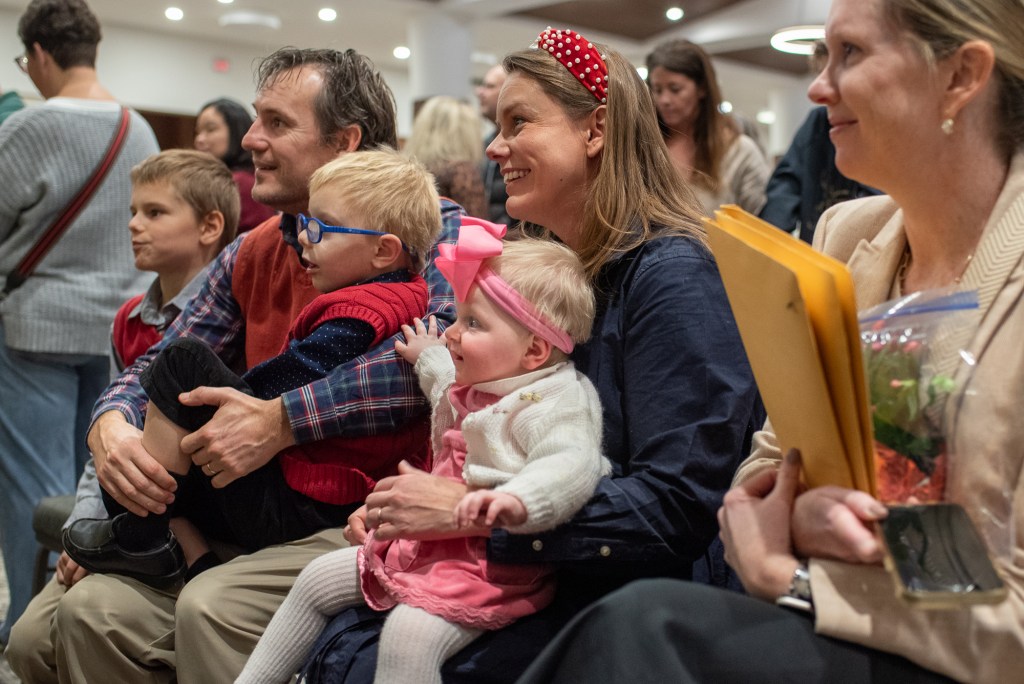
Earlier this week, U.S. Citizenship and Immigration Services canceled naturalization ceremonies in seven counties across New York State.
But Republican Rep. Michael Lawler has said USCIS will reverse its decision. County clerks around the state, including in Onondaga County, are still awaiting guidance from USCIS, they said.
The saga has caused confusion for legal experts and advocates who wondered why USCIS made the initial call to cancel the ceremonies.
“If I had to bet, I’d say that they’re going to make attending your naturalization ceremony a hassle, and drain it of the ceremonial pomp and circumstance as much as possible,” said Mario Bruzzone, the Vice President of Policy at New York Immigration Coalition, on Thursday. He added that naturalization ceremonies make people feel good about the U.S. “Symbolically, they want to sever that connection between immigrants and pride in America.”
In a statement to Central Current on Wednesday, USCIS spokesman Matthew Tragresser said that USCIS had determined that courts in seven counties “do not meet the statutory requirements to conduct naturalization ceremonies.”
Tragresser said that USCIS would “transition from judicial to administrative ceremonies to ensure compliance with the law.”
On Thursday evening, Congressman Michael Lawler announced that USCIS Director Joseph Edlow had agreed to reverse the decision.
“These ceremonies are among the most moving and patriotic events I attend as a public official,” said Lawler in a statement on his webpage. “To cancel these ceremonies without warning was unacceptable, and I’m glad USCIS acted quickly to fix it.”
While USCIS promised Lawler that the ceremonies would resume shortly, county clerks did not receive that information.
County clerks in Broome, Onondaga, Tompkins, and Westchester counties had not heard from USCIS about the reversal as of this story’s publication. As of 7 p.m. on Friday, Onondaga County Clerk Emily Essi said she had no updates. Westchester County Clerk Tim Idoni said that USCIS is “notorious for not answering quickly.”
The jurisdictional problem may have been related to confusion over whether local supreme courts or county courts were actually running the ceremonies, said Jennifer Breen, a law professor at Syracuse University.
Under the Immigration and Nationality Act, courts eligible to perform naturalization ceremonies include “any court of record in any State having a seal, a clerk, and jurisdiction in actions in law or equity, or law and equity, in which the amount in controversy is unlimited.”
The amount in controversy is the monetary value that a plaintiff seeks in a lawsuit. County courts have civil jurisdiction in disputes up to $25,000.
But in Onondaga County and some other counties in New York, the local Supreme Court was actually running the ceremonies. The local supreme courts do have jurisdiction to conduct these ceremonies, Breen said. USCIS is reviewing the jurisdictional authority of the seven county courts, according to a source familiar with the matter.
“Historically, USCIS has been very happy to let local counties do ceremonies, because it’s been a big reduction in the logistics they have to manage,” said Bruzzone.
Naturalized citizens become American as they take the Oath of Allegiance at their naturalization ceremonies.
If a county judge, unaware of the jurisdictional requirements in the INA, had sworn in new citizens, there could be a “legitimate question” about whether they were actually a citizen, said Ciro Riccardi, the communications director for Lawler. The goal of USCIS was to ensure that courts follow the “proper process” going forward, Riccardi said.
Breen explained that she did not think people were likely to be stripped of naturalization. USCIS was “heavily involved” in local ceremonies, Breen said. The organization makes the list of people to be naturalized, sends out the naturalization certificates and is required to send a representative to the ceremony.
“USCIS has actively participated in these ceremonies over the years, so there are very strong equity arguments for retroactively blessing their validity,” said Breen.
Lawler’s office initially reached out to USCIS on Nov. 14, after learning that ceremonies had been canceled. In his initial letter, Lawler called naturalization ceremonies “one of the most patriotic expressions I’ve seen in our public systems” and recalled his own wife’s naturalization day.
“The individuals participating truly believe in the American Dream, and they have waited their whole lives to become a citizen of our great nation,” Lawler wrote.
Lawler’s letter was part of bipartisan backlash to the cancellations by USCIS.
In a statement to USCIS Director Joseph Edlow, Senator Chuck Schumer said that the cancellations “are effectively denying access to citizenship and represent a serious departure from the policies and legal responsibilities of USCIS.”
The decision to cancel ceremonies appeared to be part of a “broader pattern” of increasing the hurdles to citizenship, Schumer wrote.
Attorney General Letitia James also wrote a letter to Edlow, arguing that hosting naturalization ceremonies allows residents to take the oath in an easily accessible place that their community can attend. She asked that Edlow respond to three questions by Dec. 4.
While Westchester County Executive Ken Jenkins, a Democrat, called on USCIS to reverse the cancellations, Onondaga County Executive Ryan McMahon declined to comment on the original decision.
McMahon spokesperson Justin Sayles told Central Current that naturalization ceremonies are under the purview of the unified court system, not the county executive, and it would be “irresponsible” to comment.
Read more of Central Current’s coverage

2026 Election Q&A: New York State Assembly 129th District candidate Maurice ‘Mo’ Brown
Brown, a Democrat, faces Republican Shawn Fiato in the race for the seat. The Democrat challenger took down longtime incumbent Bill Magnarelli in the Democratic primary in June.


Sean Kirst: Jim Gifford’s life equaled faith in Elmwood. Saturday’s cleanup, in his memory, nurtures that spark.
An annual gathering in honor of a guy, lost to violence, whose everyday world represented full neighborhood commitment.


Syracuse’s Flock readers may have been removed, but the readers still flourish in Central New York
Syracuse University and Baldwinsville schools avowed Flock’s merits while Congress heard testimony decrying license plate reader companies.


Facing a labor shortage, SHA, developer host free construction workforce training for SHA residents
More than 150 people signed up for the training. Part of the challenge in hiring construction workers is the number of construction jobs happening in the region.


Syracuse Housing Authority breaks ground on second phase of public housing redevelopment
The new building will be called The Simmons to honor the decadeslong career of SHA’s former Executive Director Bill Simmons.