Ricardo Levins Morales has always believed in using art as political medicine.
For the last five decades, Morales has created art for groups like the Young Lords, the Black Panthers, and the Northland Poster Collective, a group that used art to support justice and labor.
“It’s about you telling the stories that we need in order to be moved forward, to heal from trauma, to be more powerful, to change the world which is in very bad need of healing,” Morales said.
Morales’ latest exhibition Another World is Possible is on display at the ArtRage Gallery until October 26. The collection features posters created by Morales over the last fifty years. Morales’ collection includes work encouraging social change messages and accounting for social movements. Morales uses his experience of working in radical movements to activate his art. His work has involved using art as a method for offering new perspectives and solutions to historical dilemmas.
“‘Another world is possible’ simply means that just because it is this way doesn’t mean it has to be this way,” Morales said. “So the stories that I tell through my art point in that direction.”
Morales considers his exhibition at ArtRage to be a full-circle moment in his art career: Northland Poster Collective, which Morales co-founded, often partnered with Syracuse Cultural Workers. The two organizations carried artwork from each other’s inventories.
Growing up, Morales was influenced by Latin American printmaking tradition. However, he has explored different art techniques.
He started off using traditional pencil and paper to make his drawings and transitioned to working with woodcuts and linoleum blocks. As a child, he loved working woodcuts because it gave him something sharp to experiment with. In the moments when he didn’t have ink and rollers, he could always access readily available natural resources like wood, Morales said.
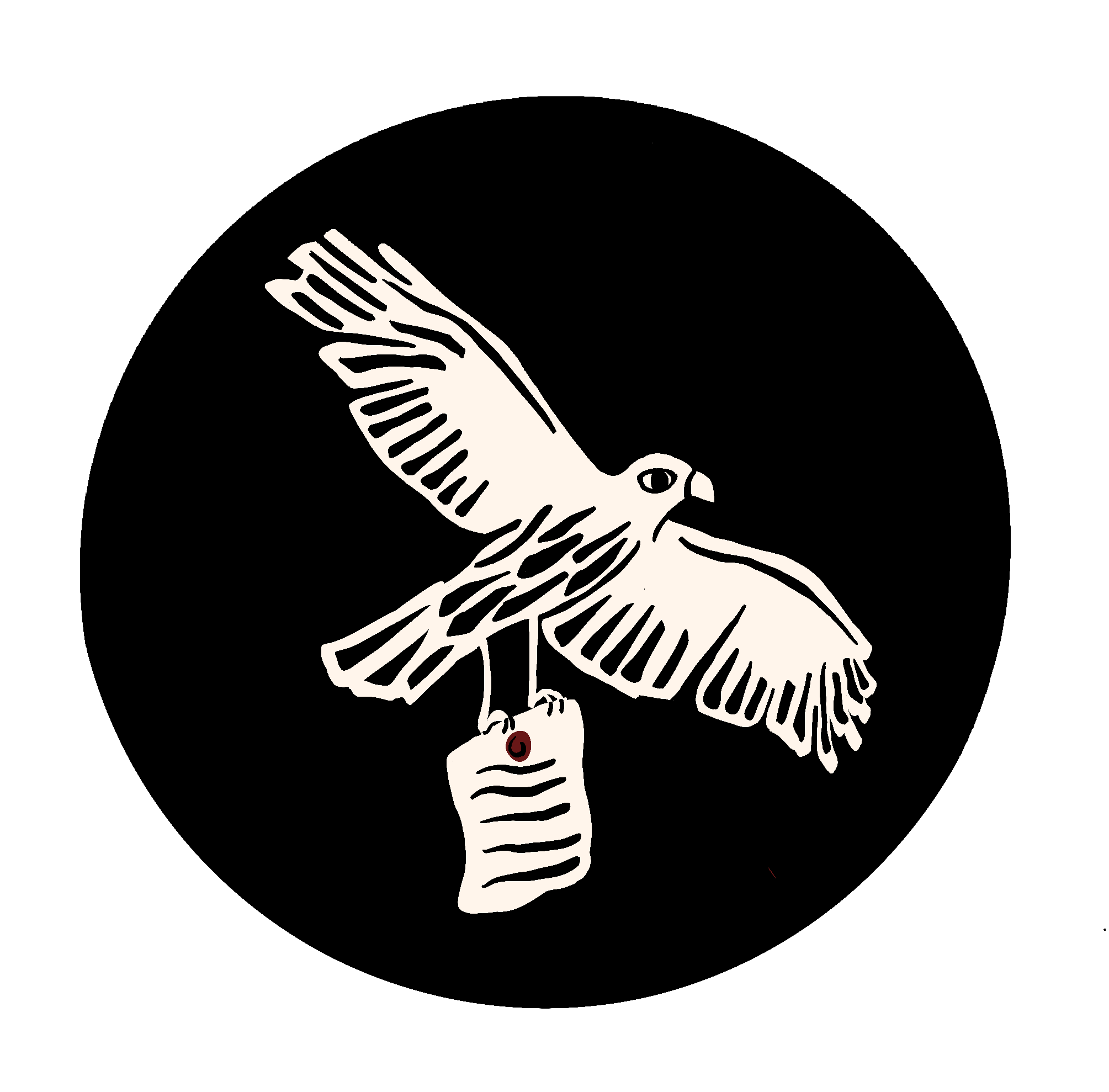
Now he creates his art with scratchboard, which is an engraving and etching technique done on a smooth or scratchable surface, like clay.
“I like the strong delineations of inside and outside. So stylistically, the tools that I use allow me to make very kind of bold, rough woodcut type imagery, or very feathery detailed, almost etching type, fine textures,” he said.
Morales, his parents, and two siblings moved from Puerto Rico to Chicago in 1967.
Long before the migration, activism has always been central to Morales’ family. In Puerto Rico, his parents fought for Puerto Rican independence. When his family moved to Chicago, they participated in anti-Vietnam War activism.
His father taught Puerto Rican history to the Young Lords. Morales often accompanied his father in volunteering for neighborhood projects. Morales also participated in protests at his high school.
“Police violence is what brought me directly into organizing,” Morales said.
He cited the deaths of Fred Hampton and Mark Clark, Black Panthers who were killed by police, as formative. Morales became involved with the Black Panther Defense Committee.
Morales didn’t mix his art and activism until after he became involved with his local chapter of the Black Panther Party. His first art for the organization was a poster to publicize a fundraiser. It was the first piece of art he created to be shared with others.
Morales eventually dropped out of high school, leaving Chicago for Minneapolis. He exchanged his work with the Panthers and took odd jobs to survive. He also kept creating art.
In 1979, he helped found the Northland Poster Collective. The organization’s art focused on labor organizing and justice.
Since then, Morales has forged relationships with people wherever he’s lived. Those relationships, he said, drive his art.
After the Deepwater Horizon oil spill in the Gulf of Mexico, people asked Morales if he would create art based on the oil spill, he said. Instead of staying home in Minneapolis, Morales traveled to Louisiana. He met with community members and residents around the Gulf of Mexico to collect their experiences.
Morales used their body language and emotions in his artwork, giving it greater depth, he said.
“I’ve always made art about what was important to me. So when I was five years old, that was chickens. When I was eight years old, it was pirates. That was an eight-year-old little boy in the Caribbean,” Morales said. “And now it’s resilience in the face of oppression. But it always comes from the deep roots.”
The ‘Another World is Possible’ exhibit will run through Oct. 26. Ricardo Levins Morales is expected to return to Syracuse next month to host a workshop on medicinal art. For more details visit the Art Rage Gallery’s website.
read more of central current’s coverage

Syracuse Housing Authority Board Chair Ryan Benz resigns
Former Executive Director Bill Simmons complained to the federal government earlier this year accusing Benz of having an “apparent conflict of interest”— a claim that SHA counsel has dismissed and the developer has denied.


At the New York State Fair, Waymo sells its future as inevitable. Is it?
The company is gaining establishment political support and for a day has its own space at the Great New York State Fair.


Sean Kirst: Until its last gasp, a second-hand lawn mower honored work of Syracuse small-engine wizard ‘Dr. Mark’
Fond memories of a throwback repair shop — and its memorable regulars — on Grand Avenue.


Announcing an expanded twice-weekly newsletter
Central Current readers will now receive two newsletters each week: “Staying Current” and “One Big Story”.


Ahead of budget season, Onondaga County Legislature’s advisory board shares proposed solutions to housing crisis
The board derived its solutions from months of community work. Legislature Chair Nicole Watts hopes the proposed solutions end up in County Executive Ryan McMahon’s proposed budget.