Memorial Day dawned with steady rain that finally ended maybe an hour after the sun came up, though the sky remained one tightly sealed gray dome. By 8:30 a.m. on that Monday morning, a little group of people in hoodies and spring jackets were working quietly to clean the polished sides of the Onondaga County Korea-Vietnam Veterans Memorial.
They brought buckets of water, long brushes, paper towels, soft cloth rags, trash bags and some brooms. Among the volunteers was Tom Slater, retired executive director of the Food Bank of Central New York, who said he showed up for the most fundamental reasons of love and reverence.
“Kevin’s one of my best friends,” said Slater, 75, also thinking Monday of people he knew in his youth, lost in the Vietnam war.
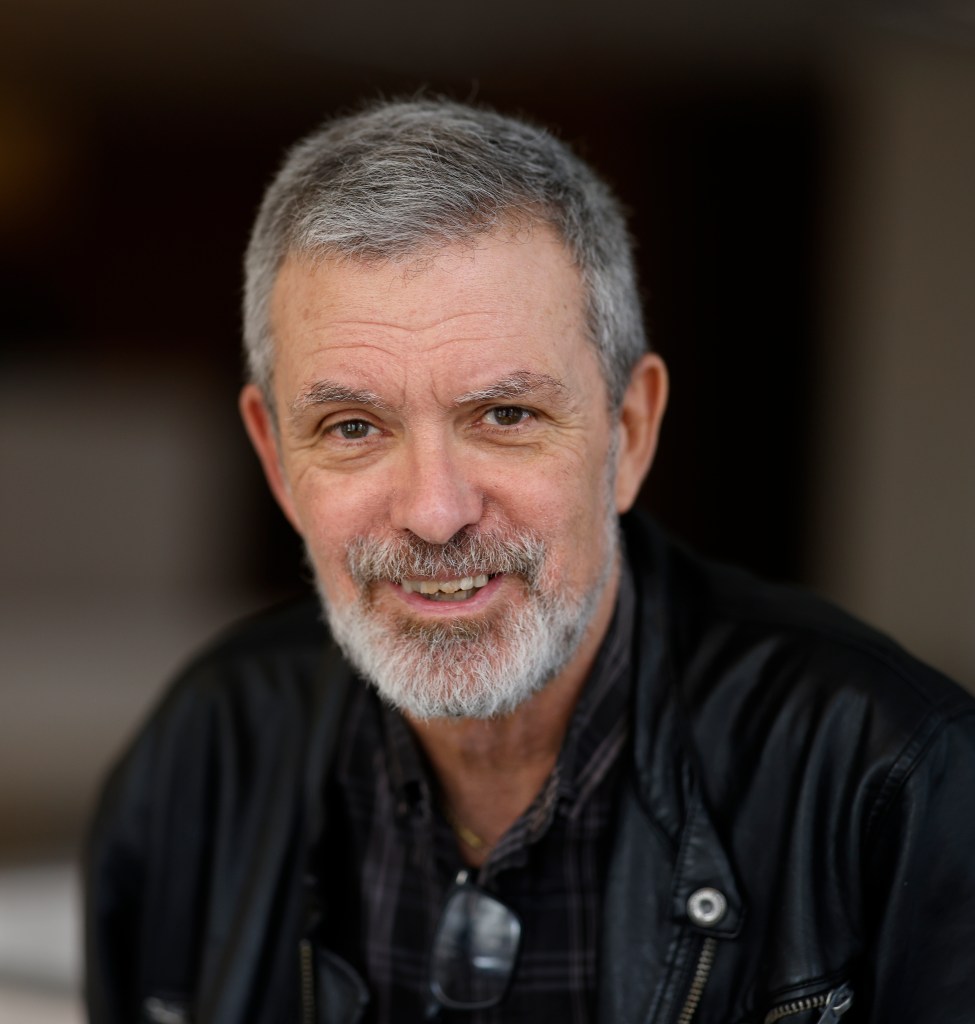
The “Kevin” he referenced was Kevin Kane, a Pratt Institute graduate who served as designer and architect of the memorial more than 40 years ago, and a guy who used a long-handled brush Monday to clean off points near the 12-foot-high peak. Slater and Kane were childhood buddies going as far back as kindergarten age, both growing up near Most Holy Rosary Church on Bellevue Avenue.
The two friends were among a legendary group of teenagers Slater calls “the store boys,” who used to hang around — from generation to generation, older brothers moving on to be replaced by younger ones — outside Maloney’s store on Stolp Avenue.

On an August morning in 1967, when Kane was still a student at Christian Brothers Academy, he learned his brother, Coley — Coleman Kane Jr. — had died at 18 in Vietnam. For much of their shared childhood within a family of 11 siblings, the two boys had shared a bedroom.
The greatest sorrow to Kane, one that only intensifies as he grows older, is how his brother never even had the chance to experience “the best of himself” as an adult, leaving his family to wonder forever about the unknowable heights of so much that Coley might have become.
In the early 1980s, Kane was working from an office in Presidential Plaza when the late Gordon Lane stopped by for a conversation. Kane recalls how he recognized Lane from long service with the Syracuse Police Department, leaving Kane to wonder for a moment why a police officer was at his door.
This time, Lane was there in a different role — as a Marine Corps combat veteran of Vietnam. There was a plan, he explained to Kane, to publicly honor Central New Yorkers who had served in the Korean and Vietnam wars — all those who went, all those who returned and all those who sacrificed everything — with a monument in a prominent downtown space near Warren and East Onondaga streets.
Lane, the committee chair, and such fellow organizing veterans as David Holihan wondered if Kane — who understood the imperative on an aching level — might consider submitting a design. Kane visited the site and considered what he could do in that small space. The vision he created would eventually become the plan selected from an open competition, and the monument was formally dedicated on Nov. 11, 1984.
At the centerpiece are two triangular slabs. The sharp edges, Kane said, are emblematic of the fierce nature of conflict, while the forms themselves — symbols of those who served — “are trying to represent their sacrifice, their commitment.”

Credit: Mike Greenlar | Central Current
The monument, Kane said, “goes up and comes down hard,” a statement on wars that ended without clear resolution — and the way veterans of both conflicts initially came home to a country where they often felt isolated, forgotten or set apart after their service.
The stone is red granite, a color Kane chose for reasons he believes speak for themselves. He is pleased, overall, with how the monument’s held up for 40 years, and he noted with gratitude that city officials surrounded it with bollards, years ago, after young skateboarders and workers with snowblowers accidentally chipped a few pieces off the risers, at the base.

Whenever he sees it, he remains focused on the statement the monument was built to make, and he said he rarely speaks of his role in how it came to be, unless directly asked. I have known Kane for decades — over the years, our dogs often ran and played together as we talked in a neighborhood field — but I never even knew he designed the monument until I stumbled upon an article that mentioned his role.
That’s because none of it should be about him, Kane said with emphasis. If the monument is doing what it’s supposed to do, the simple engraved message — “For those who served, for those who died, lest we forget” — ought to evoke thoughts of the thousands upon thousands of Central New Yorkers whose lives were changed forever by those wars.
Among them was Coley, a teenager who received a posthumous Bronze Star for giving his life while attempting to protect his platoon. That entire searing period, every minute of the day when his family learned of Coley’s death, remains as clear as if it all happened this month, Kane said.
Last weekend, just before Memorial Day, there were many texts back and forth among a group of us who’ve known Kane for a long time, and the result was the morning gathering. Kane and Slater and Bob Dougherty were all a part of “the store boys” who hung around outside Maloney’s — a place the teenage Coley also knew well — for long hours at a time they see now with a kind of wistful longing.

One of Kane’s favorite stories about his brother involves Coley and Ed McLaughlin, another veteran who told Kane the tale. The two teenage friends were working as summertime caddies in the 1960s at the Bellevue Country Club when – in thank-God-for-this-gift astonishment – they saw a keg of beer bounce off the back of a pickup and start rolling down a hill.
With McLaughlin’s help, Coley corralled it and they managed to find a way to wrestle it over to the corner by Maloney’s, for a celebration.
Dougherty, a former city councilor who is a tireless and low-profile ringleader for civic beautification projects, lived within viewing distance of that Bellevue corner. He showed up Monday not so long after hip replacement surgery, which he did his wisecracking best to brush off as no big deal. He brought along fellow volunteers Teresa Pilon and Linda Ricci of the “Pedals to Possibilities” program at the Brady Faith Center — a club devoted to riding bikes, even on the fiercest winter days.
“I came to help Bob,” Pilon said, “and because I care about our city.”
They were joined by Teresa Doherty, a retired Corcoran High science teacher who also grew up in the same neighborhood as Kane, and by city court Judge Jim Cecile, a quiet regular at many of Dougherty’s impromptu cleanups.

Just past the early rain on a Memorial Day morning, they surrounded the monument and washed and swept and picked up litter until the entire site was cleaned, and then they prepared to leave for other plans on the holiday — which for Kane meant volunteering for a few hours at the Samaritan Center.
He was moved — how, he asked out loud, could he possibly not be? — to be aided by these old friends in this collective task. But he emphasized again that the larger reason drawing all of them together was really about a shared “commitment to all these brothers and sisters who served,” a purpose reinforcing exactly why the monument exists.
Hard to explain, but if you were there, you felt exactly what he meant. In a time when screens and online noise and relentless digital cruelty so often make it hard to really stop — to be quiet and just feel — it was impossible not to sense the sheer love and communion within this little group, lifetime friendships cemented by intimate knowledge of joy and grief.
All of it exemplifies Kane’s hope, which is that even a few people walking past the monument on any downtown day might pause from whatever errand they’re pursuing to consider for a moment the reason it was built — all the young men and women it represents — and then to contemplate the power of the last five words on the inscription:
“The dignity of their sacrifice.”
Read more of Central Current’s coverage

County Sheriff candidates Shelley and Lenhart claim they each have more relevant “experience” to run the department. How do they plan to do it?
Candidates for Onondaga County Sheriff discussed moving the county jail operations to a joint campus in Jamesville, progressive discipline, opioids, and immigration in interviews with Central Current


2026 Election Q&A: New York State Assembly 126th District candidate John Lemondes
Assemblyman Lemondes, a Republican, will look to retain his seat for a fourth term in Albany, facing off against Democrat Ian Phillips in November.


2026 Election Q&A: New York State Assembly 126th District candidate Ian Phillips
Democrat Phillips is seeking to unseat Republican Assemblyman John Lemondes who is on his third term in Albany.

Scenes from rally day
On the day of President Trump’s visit to Syracuse, the competing sides agree on one thing: the American system is rigged against the people. They disagree, however, on who’s to blame.


Trump’s speech casts a long shadow
For himself and his allies, President Donald Trump has pushed the limits of acceptable political expression. For his opponents, Trump has pushed suppression and surveillance of free speech.