In October, Central Current hosted an interactive panel conversation featuring decision makers connected to the redevelopment of public housing in Syracuse’s South Side.
If you didn’t get a chance to attend the panel, you can now watch a video of the conversation. That video is included below.
Syracuse is preparing for a historic redevelopment of its public housing. As the Interstate 81 viaduct is removed and construction begins on the Community Grid, more than 1,000 public housing units will be demolished and rebuilt with an entirely new neighborhood design. This $800 million project will take years to complete and will reshape the fabric of Syracuse for generations to come.
This conversation between Central Current journalists, the panel of community leaders, and members of the public explored: the systems in place to support tenants during this transition, a review of the projected timeline and the progress made to date, and residents’ concerns about the project.
Moderator: Chris Libonati, managing editor, Central Current
Speakers:
- William J. Simmons, Esq., Executive Director, Syracuse Housing Authority
- Michael Collins, Commissioner of Neighborhood and Business Development, City of Syracuse
- Lanessa Owens-Chaplin, Esq., Director of the Racial Justice Center, NYCLU
- Raquan Pride-Green, Executive Director, Blueprint15
- Marquita Hetherington, Neighborhood Navigator, Blueprint15
The event was held Oct. 7 at the Salt City Market Community Room on South Salina Street. It was open to the public.
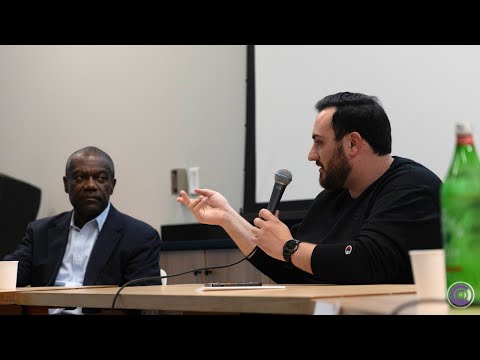
Below is a transcript of the panel discussion. Please note that it has been edited for length and clarity:
Chris Libonati: We wanted to convene this panel today because this project is evolving. With the HUD grant coming through, we figured it was the right time to do a panel like this. But the first thing I want to do is just go through from my right to left, just describe and say who you are and your connection to the project.
Marquita Heatherington: My name is Marquita Heatherington and I’m a Neighborhood Navigator with Blueprint 15.
Raquan Pride Green: My name is Raquan Pride-Green, Executive Director of Blueprint 15 and my family’s from the footprint – on my mother’s side I’m third generation and my father’s side I’m fourth generation.
Bill Simmons: Bill Simmons, Executive Director of Syracuse Housing Authority. I’ve been with Syracuse Housing Authority for over 18 years.
Michael Collins: I’m Michael Collins, Commissioner for the Department of Neighborhood and Business Development in the City of Syracuse. I assist the department with all building permits and zoning improvements that run through as well as a lot of the other work related to it.
Chris Libonati: Awesome. Alright, so I think I’m going to open this very broad, but I do want to talk about the timeline here for the project. If we could talk a little bit to the timeline of the project and where it’s at right now. Bill, when do you see shovels in the ground?
Bill Simmons: Sure, thanks. Well, the project, as many of you know, involves the redevelopment of Pioneer Homes and McKinney Manor, Almus Oliver Towers, and ultimately we’ll get to Central Village. We were looking at starting at Almus Oliver Towers first, doing the rehab there, and then moving to McKinney Manor, the demolition of those 75 units, and building approximately 130 on that footprint, and then moving into phases three to 11 at Pioneer Homes. And it’s a project that will probably take over 10 years to complete over 11 different phases, and pretty much starting with the financing all that together for the projects, and closing sometime in late this year, or early 2025.
Chris Libonati: When you say closing, sorry, just because I don’t necessarily know what that means, I’m sure some of the audience may not know – what do you mean by closing?
Bill Simmons: Yeah, we’re getting the resources from the Department of Housing and Community Renewal, they will provide the tax credits. And so when they say closing, you’re looking at all the dollars currently gathered, we’ve got the investments, and then start being able to move forward with relocation and development of the properties.
Chris Libonati: What would you guys have to start doing next, once closing comes in?
Bill Simmons: So in the case of Almus Towers, a high rise building, with about 180 residents existing, and we have a contractor – a developer – McCormick Baron Salazar, that will work towards redeveloping units and phases and so some of the residents will move out of the other units that we’ve been remodeling and we’ll continue that there. When it comes to McKinney Manor which has 75 units and a lot of new space, we will relocate the remaining 63 families that we have in public housing or different housing choice vouchers, and we will start demolishing those units and building a grand total of about 135 units that will be mixed income – it won’t all be public housing units.
Chris Libonati: Michael, I know that there’s a lot going on the city side. I know that the Community Grid Vision plan isn’t necessarily the same as the other stuff going on, but how would you view the city’s role around what’s going down, what’s going on at SHA and what [the city] is going to do around that?
Michael Collins: So the city’s got a fairly comprehensive role for all of the residents, our constituents, and so we’re really looking to make sure that in all the best ways possible it’s the best project that it can be. Also, to your point around community grid plan, they are two separate projects, but they’re not to the people that live there.
So the Federal Highway Department is where the money is coming from for 81, so one of the ways that we work to tie them together is working with New York State Department transportation, we’re able to secure a $180 million grant to make improvements along the 81 project. And very specifically, $30 million of it will be administered by the city within this footprint. So that’s, that’s one of the ways.
And then, frankly, we just took a lot of engagement with with neighbors, with business owners that are in the overall footprint to make sure that what we’re doing there is what’s important to those that are there as well as who else might find this the neighborhood where they want to be with it being redeveloped and with that massive barrier being pulled out.
And then, as I mentioned in the introduction, everything that has to do with how the buildings are constructed, from a permitting standpoint, zoning standpoint… And then lastly, fundraising. I talked about the $30 million and Mayor Walsh was able to secure $10 million very specifically for the first for the first phase, for what’s we’re going to end up using it for some units. We’re going to use it for some public infrastructure. It’s pretty comprehensive.
[Lanessa Owens-Chaplin, Director of the NYCLU’s Racial Justice Center, joins the panel]
Chris Libonati: Lanessa – I’ve kind of had everyone describe who they are in relation to the project. If you could go ahead and do that real quick.
Lanessa Owens-Chaplin: My name is Lanessa Owens Chaplin. I am the director of the Racial Justice Center at the New York Civil Liberties Union. I’m a civil rights attorney by trade. I’ve been involved in the I-81 redevelopment project, I think since it became a real conversation back in 2017.
The primary goal of our work is to elevate the community concerns. Work along the community to make sure that they’re being heard in the project, and they’re also receiving the same benefit as a result of the project and highlight some of the burden that the community experiences. And we were also involved in the litigation where we supported the New York State DOT’s community grid action.
Chris Libonati: Awesome. Thank you. In terms of things you’ve seen with this project – I know you guys have probably done some door to door work, what have you heard from residents about this project?
Lanessa Owens-Chaplin: I think overwhelmingly, people feel overwhelmed about the amount of projects that are happening in their neighborhood. And I think Michael put it very clearly, this is one big project to them, and so trying to convince them that this is multiple projects happening in their footprint doesn’t really matter. That conversation is certainly moot, because they will be affected by all of these projects.
And so how will they be affected? What kind of security they have in terms of being able to afford their housing after the redevelopment happens, I think, is one of the major concerns. And cohesion, right? People don’t want to feel like they’re chess pieces on the chessboard. You can just move them around and move them back and move them around and move them back.
So some of the biggest concerns we heard is like, how are we going to be supportive of this massive redevelopment, and how are we being heard during this process.
Chris Libonati: Raquan and Marquita – in talking to residents, what have you guys heard about this project so far?
Raquan Pride Green: When it comes to this project, it depends on who you talk to. There are some people that support it, feel informed. There are some people who are not as engaged, so they buy into all of the hearsay, because they just don’t know. And then there are other people are somewhere in the middle. So I would just say it depends on who you speak to. There’s a lot of people who live in this footprint, so everybody has their own opinion and their own challenges that they have to deal with.
Chris Libonati: I know some of the work of connecting with residents, keeping them informed, has been part of what Blueprint 15 has done. What has been the process for you guys so far? I know it’s been a long process, so pick a starting point.
Raquan Pride-Green: It’s been a long process. It’s gonna become even longer. We have Blueprint 15. We have our neighborhood navigators program. So we have four neighborhood navigators, one lives in McKinney Manor and three living in Pioneer Homes. So they do door to door, they do cold calls, they communicate however they feel necessary.
When there is some type of community engagement event that we’re involved in, my neighborhood navigators call people, they pass out flyers, they knock on doors, but they also live there, so on their way to the store, they’re getting stopped and being asked to answer questions.
So they’re always on the clock, as I would say. We try many different things, and we also host community engagement events ourselves, sometimes in collaboration with the Syracuse Housing Authority, sometimes with the city, and sometimes they’re stand-alone, but we always make sure that they are involved in some capacity.
Chris Libonati: What are the most common questions you get from people that live in the footprint that’s affected?
Raqual Pride-Green: I’m going to turn that over to Marquita, because she gets the direct questions more than I do.
Marquita Hetherington: The number one question that we receive is, ‘where are we going?’.
Chris Libonati: Obviously that’s a pretty tough question for you to answer, so what are the steps you would take someone through when they ask you that? Or what would you recommend? Where do you send them?
Marquita Hetherington: We work with an agency, Urban Strategies, who actually does do the door to door, taking the surveys and asking those questions. So they do ask for their preferences when it comes to moving out of their apartments like that. And so once that information is collected, it is then imported and given to Syracuse Housing Authority. You know, they give the realistic – we don’t have that space available, this is available, or this might be where you’re going.
Chris Libonati: I don’t know who’s best to answer this question, so I’m going to ask you kind of broadly: what has that process been like? When they do come in and they do ask ‘where am I going? Where can I go?’ I know we can’t give a specific answer, because there’s at least 63 different answers in McKinney Manor probably. but what do you tell them? What’s the advice that’s given? Like, how did and how does Urban Strategies help in that?
Bill Simmons: We, as mentioned earlier, partnered with McCormick, Baron, Salazar, a development team that’s been out there for over 25 years and has done a number of these projects, working with public housing throughout the country. And they also partnered with Urban Strategies who’s the same – been around for a long time, working with families who are in these very vulnerable situations. But you know, the Department of Housing and Urban Development provides legal protections for all these residents.
And so anytime a Housing Authority is saying, we’re going to redevelop properties, this whole thing is really all about choice for residents. That’s why it’s called the Choice Neighborhood plan. It’s about giving them an opportunity to say, hey, look, we knew that we were going to be have this give these families an option and can’t tell them to do the redevelopment.
Let me just add that, when you put together a redevelopment program with the Department of Housing and Community renewable using these tax credits, you have to redevelop the property in an 18 [month] period of time, and then those residents that will move have the right to return.
But many of them, especially this type of housing market, want to make sure that there’s some in place for them to go. And so the first 63 family that may be moving, 40 of them said they wanted to be in public housing. We have places for them. The other 20 said, I’d like to take a Housing Choice Voucher. We’ll have houses available for them. Urban Strategies, Blueprint 15, Syracuse Housing Authority – will be working with these families because it’s a nerve wracking type of situation.
And although these residents have these rights and legislative protections, they don’t always believe it. And oftentimes I know that Syracuse Housing Authority has been facing cuts with the federal government for the past 15 years. You know, we’ve been dying from death of a thousand cuts. We had to pay for this program, in partnership, and working with the I-81 project that started some 16 years ago, talking about, you know, redeveloping every neighborhood and what can we do?
And at the time when I first moved on with the committee that was talking about developing I-81, from my standpoint, whether they rebuilt the highway or break down into the street grid, I knew it was going to be a major disruption of the neighborhood, and how could we ensure that these residents benefited. I talked to some of the folks from the Urban Strategies group that invited Syracuse Housing Authority out to the Embarcadero area in San Francisco, where that viaduct fell down. And so they just showed you how I can really return in a different way. I said to the gentleman who was conducting the tour, I said, well, listen, it looks like there’s going to be some major construction in the neighborhood. You had a process of eminent domain, what really happens? I mean, how can I really get anything for residents if the federal and state governments just has the right to come in and tear up the neighborhood? So you know, should I be getting some attorneys? What should I be doing?
He says, ‘You know, Bill, back in 1993 President Clinton came out with an executive order which says that anytime there’s a major disruption in the community with low income, particularly of color, there’s actually decent enhancements.
And so from working from that standpoint, we hired a team doing what came back in 2014 they helped us put together a plan, a plan that was going to de-concentrate poverty in that neighborhood, a plan that would take advantage of the fact that we were close to University Hill and all of the employers there, and the new emerging downtown.
This kind of started the idea of putting together this redevelopment plan. Now Pioneer Homes is the first public housing development in New York State, and so drive by there with all the bricks, you just look at it say, ‘Wow, this thing is still in good shape,’ but it doesn’t need marketability and with all of the new codes and standards for families and for visibility – we had to do something different.
HUD has put us in position where they came out with a rental assistance demonstration program, a program that allows housing authorities to keep the funding for the residents, or go from the public housing program to the Section 8 program. And what that allows us to do is go out and get funding from tax credits and other sources to redevelop our properties.
I think very often when people look at the Housing Authority, tearing down the development and rebuilding new, oftentimes those residents who live that neighborhood don’t get the right to return. But with public housing, they have that right, and they’re going to be given those rights, and law reinforces by the Department of Housing and Urban Development that those folks have a right to return. And we’re going to ensure that those 674 folks will have those units. We’re going to have more units for mixed income. We want to de-concentrate the poverty.
And so we’re just making sure that we work with residents as we go forward in this process, because we’re doing it in 11 different phases, so that the passage majority of the residents can take advantage of the redevelopment when it’s all said and done. And so we’re very, very excited about the project. It’s a big project, needless to say, probably, you know, as big as many projects going on in the region, but it’s a project that federal government – HUD – has supported. They came in with $50 million with a choice that we would win, the governor has been involved, the state, the city, the county… unfortunately it’s going to require them to make at least one move, maybe two, but in the end, it’s going to be a lot better.
Chris Libonati: There’s a lot there. There’s a couple things I want to break down: the Rental Assistance Demonstration, RAD conversion. So mean, like in layman’s terms that’s public housing – Section 8 – with a public/private partnership, right?
Bill Simmons: The essential difference is the residents will still have 7% of their support in terms of subsidies from the federal government. And most of our residents paid 30% of their income towards their rent. And so with this demonstration program, because it really wasn’t the will on the part of Congress to start funding public housing like they used to do years ago and deal with all of our needs, they came our with a program that says, ‘housing authority, if you want to move into the Section 8 program, residents will have the same subsidy to support their support them on a daily basis, but this will allow you to go out and use the tax credit program and other dollars to be positioned with properties and do something different and new’, and we decided to move in that direction.
Chris Libonati: I know the movement question, that concern is maybe the biggest question that I hear. If anyone doesn’t think that, let me know. But in terms of right of return, what is included right of return? What will be included in right of return for residents?
Bill Simmons: As we build out these units and get approval from the Department of Housing and Urban Development, they want to make sure that those 675 units that house residents right now will be rebuilt and have a place to come back to. And so that’s what that means, and the form of their rights. And again, many of them want to stay in public housing. We have 23 units of public housing, another 200 units of affordable housing, so we have an opportunity for them to move into those units.
Now, when we first started this discussion over 10 years ago, affordable housing, housing in any community, wasn’t as problematic as it is today here in Syracuse and the rest of the country. So because of the large size of the Syracuse Housing Authority, and the fact that we have some vacant land, we’ll be able to build some new units for the residents to move into first. And between those two combinations of the existing units that we have now that we’ll be building – we’ll be able to move 50% of the residents from old to new. They only have to move once, and then the other 40%, 50% will probably have to move twice.
Chris Libonati: What type of requirements will be in that right of return agreement? Are there any stipulations that will be on current tenants who want to move back? I’m sure being current on rent is one of them, but I’m sure there are others.
Bill Simmons: Well, you want to make sure that the residents are in good standing, and most of them will know that before they even move out, good standing gives the ability to return. But again, it’s an opportunity to make life better for the residents that are here today. Many of them are having a lot of anxiety because it’s a big change for them, and they don’t know. All they have is government and, you know, who trusts government? I mean, that’s the vulnerability when you’re low income, and people of color.
But one of the reasons why we’re doing it in phases is because we want to make sure that once we build those new units and they see their family and friends coming back, that we’re being supportive, but it’s going to take sacrifice on their part to move out and then move back anew.
Chris Libonati: Lanessa, I know we’ve had conversations about this before. Have you seen other rights of return other places, and what do they usually say?
Lanessa Owens-Chaplin: Right to return is a little bit tricky, just like Section 8 vouchers are a little bit tricky. So Section 8 vouchers on public housing are attached to the person, and there’s a lot of ways that you can get kicked off your Section 8 voucher and so I think it’s a little more risky when you’re putting folks out in the community with a Section 8 voucher.
I mean, we saw in like my work, a lot of folks who get retaliated against from their landlord. Let’s say they file a code complaint, their landlord retaliates them, right? That’s automatic loss under Section 8 voucher if you get an eviction from your housing. So I think there’s some housing vulnerability with trying to kind of transferring people from affordable housing to Section 8 vouchers, but you get behind in your rent, right? That’s another reason why you can lose your Section 8 vouchers.
A lot of reasons why the kind of the government will fickle around Section 8 vouchers. And so they’re not that black and white, where if you get it, you’re set. There’s a risk that you find when you have a Section 8 voucher.
I think the second to your point around right to return is a little bit tricky. And we saw across the nation how this thing has fit out very bad, and we saw how it fit out okay. I don’t think you saw an example, and I hope this is the example, where the right to return is actually a really good outcome. You saw some organizations or some places, I think New Orleans is a good example, where there was about 3% of folks returned, right? And that’s because the developers couldn’t find their phone number. They didn’t have an up to date phone number, they had no way to reach them.
We know that people who tend to live below the poverty line will often change their numbers. And so there’s a kind of a responsibility of the tenant, to keep the folks updated on what their phone numbers is, keep the folks updating on what’s happening in their life. And if you’re thinking about a project that’s five, six years down the line, your life can be very different. And you could forget to change your number, you could forget to inform the developers, and now you got that call and you missed it.
And so we’ve seen, I think the most successful rates of return that we saw was like a 20% return. And then it also gets complicated, depending on who your developer is, and what kind of policies or procedures they put in place for you to return. We’ve seen Choice Neighborhoods, for example, some of them require you to have a 600 or 620 credit score. Some of them have required you to not have any convictions on your record, misdemeanor or felony. Some of them have required you to work at least 20 hours a week. So that kind of that kind of takes out all the folks who are on disability and social security.
I think there’s a lot of nuance around the right to return, and when you start having this public/private partnership you need to look out for some of those things.
Chris Libonati: Is any of that definitive at this point? Or when would something like that be developed in Syracuse?
Bill Simmons: The right to return, whether it’s public housing or Section 8, you always have to adhere to rules of regulation. We get people all the time that don’t adhere to who’s regulation or pay their rent. They’re no different on that part, no guarantees. We are in the process of developing the standards for residents returning. But as I mentioned before, we’re doing this in 11 phases, whereby mostly residents only move once from their old public housing community into the new, and then the remaining will be with a Section 8 voucher.
And many of those residents that will be moving twice, a lot of them want to move into public housing until their unit is rebuilt. And when you’re working with the New York State Department of Community Renewal and a tax payer program, you have to rebuild those units in 18 months, their particular units. So it’s not it’s not an extremely long time that they’re out of pocket, out of communication.
We have Syracuse Housing Authority, we have Urban Strategies, we have Blueprint 15 – all these groups that are working with these families to make sure we try to stay in touch and connect you with them… It’s about choice, so some families may take the voucher, move into a community, settle down, with a family member, school’s good here… They go, ‘I don’t want to come back’, but that’s what it’s all about, doing, the choice, we’re not forcing anyone to do anything. But so many would like to be in the community you got rental housing, mixed income, Blueprint 15 building a new school for early childhood learning, YMCA, creating opportunities and services for families where they really thrive. And so it, it so in terms of the details of the, you know, of the good standing, you know, we’re working through all of that.
We got a little time, but I think that everybody knows the commitment on the part of the Department of Housing and Community Development, the Syracuse Housing Authority, is making life better. And you got the city and the state and all kinds of groups that are committed to these residents. So I just, you know, try to minimize a situation where a resident moves out and this issue and they get worse than that.
Chris Libonati: A bit of a kind of niche question here, but I look at eviction calendars at least once a week and it’s no secret the toll that the pandemic has taken on tenants and landlords. If a Syracuse Housing Authority tenant owes back rent, and I know being up on your rent might be a requirement to come back, but what help is there right now for a tenant at SHA to get current and then maybe return?
Bill Simmons: During the pandemic, so many residents did fall behind their rent and but we did work with the federal government, New York State, we worked with the city of Syracuse… to help residents get caught up.
I’m a member of the New York State Public Housing Authority Executive Directors group. We had advocated to get more money for some of those residents that were far behind. But you get to a point with HUD and the state saying that some of these folks have got to catch up. And when they meet with us prior to COVID or prior to any situation, we always try to make back payment arrangements for residents getting caught up at the major business level. But ultimately, everybody’s got to be accountable. And so if you’re not working with us and utilizing some new dollars that the county makes available for residents to get caught up, you know it’s not gonna be a great outcome.
[Please review the video for the full question and answer portion of the event.]
read more of central current’s coverage

Sean Kirst: In Syracuse, in a season for ghosts, Donald Trump collides with legacy of president who served when Trump was born
Seventy-four years ago, on his own campaign visit to Syracuse, Harry Truman described an American landscape powerfully opposite to how Donald Trump portrayed it Friday night.


Trump implores CNY Republicans to ‘pretend’ he is on the ballot ahead of midterms. Will they listen?
President Donald Trump’s visit to Syracuse is part of a nationwide campaign ahead of a critical midterm election that could decide the fate of Republicans in Congress.


Trump’s pitch to Central New York: Despite war, rising prices, a ‘golden age’ in America
The president spoke in Syracuse about New York energy, his own successes and the unfairness of the Nobel Prize Committee.


New study shows one in four schools in Onondaga County has high lead levels in drinking water
27.3% of the schools in Onondaga County have at least one water outlet in public schools used for drinking or cooking that tested above the state’s standard of 5 parts per billion of lead.

After ‘horseplay’-less budget cycle, Onondaga County Legislature approves 2027 budget and $25 million housing program
County Executive Ryan McMahon had told legislators he would fund their priority project if there was no “horseplay” in the budget cycle. Everybody played along.